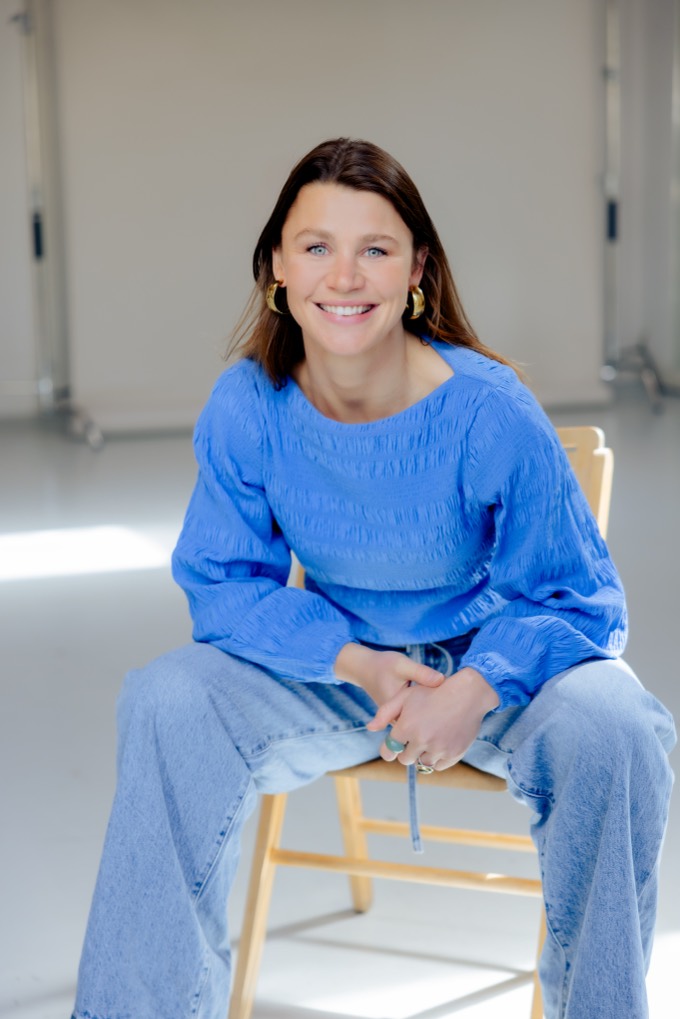
Emma van Leeuwen | Process · Data · AI

From spark
to scale.

Minder lullen, uh, less talk. More doing.

I help teams get AI out of the slide deck and into daily use. AI agents, RAG assistants and automations your team actually uses on Monday morning.

Emma van Leeuwen
Cofounder of PlaiwrksWinner, Whale × Anthropic HackathonAmsterdam

Clients I've worked with

What drives me

“This is going to be complicated.”

“Wait, can we also do this?”

Nothing gives me more energy than seeing someone's eyes light up when they realise what's possible. That's my favourite part of the job.

I believe proactivity is the key to every improvement. Don't wait until something breaks, go looking for what could be better. And right now, that's more fun than ever: every day new possibilities pop up, and we get to discover together what we can achieve with them.

I love making work lighter. Fewer manual steps, smarter processes, more time for the stuff that matters. And because I speak both data and business, I can turn “this would be nice” into a business case that convinces everyone at the table.

And I'm a doer. I'd rather not spend hours polishing slides about what we could build. I'd rather build it. A rough prototype on the table says more than a perfect deck, and it gets everyone talking about the right things.

Analytical where it counts, creative where it can.

CuriousHands onAlways enthusiastic

Process, data and AI

Why I combine all three.

Over the years I've worked on a wide range of assignments: from improving processes and building AI agents to HR analytics, finance data in Databricks, customer insights and AI trainings. Energy, retail, scaleups, HR and finance. Different worlds, but one lesson keeps coming back: these three only really work together.

ProcessDataAIImpact

Tap one to see what goes missing.

Put them together and you get the full chain: understand how the work flows, measure where it gets stuck, and use AI to make it smarter. That's how an idea becomes a business case, and a business case becomes real impact.

A few things I've built.

Real projects, real teams. Some client details anonymised.

Internal AI tool · Consumer brand

From a dozen scattered reports to one comparable verdict

The problem

Every brand partnership was judged differently. Each department involved sent results in its own format, so nobody could say which partnership had actually worked.

What I built

A web app that turns every partnership brief into a standardized 360° report, answered against the same nine strategic questions.

  • Briefs flow in automatically from the campaign system. Revisions are reviewed field by field, so results are always read against the objective that applied at the time.
  • Each department gets its own delivery page through Slack. It already knows the brief and the KPIs, so people only add what their team alone knows.
  • Claude drafts the analysis with guardrails that are enforced, not requested: each question is answered only from the departments linked to it, every number traces back to a delivery, and analyst corrections survive a rerun.
  • Nothing reaches a report without an analyst, and every delivered version is kept as an unchangeable record.
  • Built with agentic coding: I owned the design and the decisions, Claude Code wrote and tested the code.

What it changed

  • Far less analysis work: analysts review a draft instead of writing from scratch
  • Departments see for themselves how they performed
  • Sharper strategic choices on what to repeat and what to drop
  • Everyone knows upfront what is expected of them
  • Centralized and standardized, so we finally understand what we are doing
  • Claude
  • Supabase
  • Edge Functions
  • n8n
  • Slack
  • Vite
  • Vercel
  • Claude Code
  • Agentic coding
  • 380 automated tests
AI agents · Occupational health

From eight people writing instructions to two delivering them

The problem

A new absence management system had to go live, with every process and work instruction documented. Eight specialists started writing, and every instruction came out different: structure, tone, level of detail.

What I built

I owned the processes and was asked to lead the work instructions too. I built an agentic workflow that took over the writing, so every instruction followed one format. The specialists went back to the work they are good at, and I owned delivery of all the information.

What it changed

  • Every instruction in the same structure
  • Specialists back on the work they enjoy
  • Significant FTE and cost savings
people needed for the instructions
8 → 2
people needed for the instructions
specialists back on their own expertise
6
specialists back on their own expertise
RAG · AI automation

From a manual Claude project to an insights assistant for the whole company

The problem

Every team wanted fast answers based on everything the company had already researched. That knowledge sat in dozens of reports, behind one manual Claude project that read every document for every question. It was already at a quarter of its capacity.

What I built

A RAG assistant in Slack that answers from our own research, cites its source and says “I don’t know” instead of guessing. An n8n pipeline picks up every new document, routes it by file type and makes it searchable. Plus an intake tool, a curated metadata layer and an adoption dashboard.

What it changed

  • Insights in seconds, for everyone, without asking an analyst
  • Every answer traceable to its source report
  • Cheaper and faster per question, and data stays in our own environment

How it flows

  1. Google Drive
  2. n8n
  3. Supabase
  4. Claude
  5. Slack

Plus lead engines, websites and internal automation for a range of clients.

Tools and platforms

Any tool, any stack. The organisation picks the stack; I move within it.

Data & analytics
SQLDatabricksSnowflakePower BIGA4
Models & assistants
ClaudeChatGPTGeminiMicrosoft CopilotCopilot Studio
Orchestration
n8nMakeZapierPower AutomateApps Script
Agentic coding & building
Claude CodeCursorGitHub CopilotLovableSupabase
Process & collaboration
BPMNMiroJiraNotionMicrosoft 365

I also train teams on putting these tools to work, as an AI trainer for an international training agency. So I know the tooling from both sides: as a builder and as an end user.

My approach

Six steps to get there.

  1. 01

    Ambition

    Where do you want to be?

    We start with your goals, not with the technology. What keeps you up at night, and what would make a real difference?

  2. 02

    Baseline

    Where are you now?

    An honest look at your data, tools, skills and the AI that's already being used (officially or not).

  3. 03

    Opportunities

    Where is the value hiding?

    I go where the work happens: processes, routines, the things that take too long. Every idea gets a clear business case, so we know what's worth it.

  4. 04

    Prove it

    Small, fast and visible.

    We build a prototype or quick win that shows what's possible and gets people excited.

  5. 05

    Adoption

    Technology doesn't change organisations, people do.

    Through trainings, ambassadors and hands on sessions, we make sure AI actually gets used.

  6. 06

    Scale

    Make it stick.

    A roadmap, clear ownership, smart governance and KPIs that show the impact over time.

Three ways to work together

The full journey

Starting from scratch? We walk through every step together, from first ambition to a scalable approach.

Jump in where you are

Already on your way? I'll pick it up from where you stand. A few examples:

Just the spark

Need someone to help you scope that one idea? Or a session that gets your team excited about AI? I'm in. Sometimes a single workshop or sharp scoping session is all it takes to get things moving.

Fewer slides · more prototypes · fewer manual steps · more “can we also do this?” · Fewer slides · more prototypes · fewer manual steps · more “can we also do this?” · Fewer slides · more prototypes · fewer manual steps · more “can we also do this?” · Fewer slides · more prototypes · fewer manual steps · more “can we also do this?” · 

Let's build something great together.

Tell me the messy version. If there's an AI tool hiding in there, I'll help you find it. And then build it.